


📍Post Excerpt:
Want your child to manage money well? These 5 simple daily habits build strong budgeting skills—backed by Fin Free Kid tools and tips!
Teach kids budgeting through 5 easy daily habits using Fin Free Kid’s planners, kits, and fun money tools for lasting money-smart behavior.
Help your child learn budgeting through 5 simple daily habits using Fin Free Kid’s money kits and planners for practical financial skills.
💡 Why Budgeting Should Begin in Childhood
In today’s fast-moving, cashless world, it’s never too early to teach your child the art of budgeting. Budgeting doesn’t mean putting restrictions on your child—it means giving them the power to make smart decisions. Children who grow up understanding the importance of planning, saving, and spending wisely are more likely to become adults who avoid debt traps, build wealth, and make thoughtful financial choices.
That’s where Fin Free Kid steps in—with kid-friendly planners, flashcards, jars, and games that simplify the concept of budgeting for young minds.
Here are 5 effective daily habits you can start right now to raise a budget-smart child:
🪙 1. Introduce a Visual Daily Budget Planner
Children learn best with visuals. Encourage them to jot down how much they spent on snacks, toys, or gifts every day—even if it’s just ₹10. This creates awareness and encourages mindfulness.
🟢 Try This: Fin Free Kid’s “Daily Budget Tracker Cards” come with stickers and prompts that make logging daily expenses feel like a game. Over time, your child will naturally become conscious of how much they spend—and where.
💵 2. Shift to a Weekly Allowance (Not Daily)
Instead of giving your child money every day, start giving them a small fixed amount every week. This makes them think ahead: “Will I have enough money for Friday if I spend too much today?”
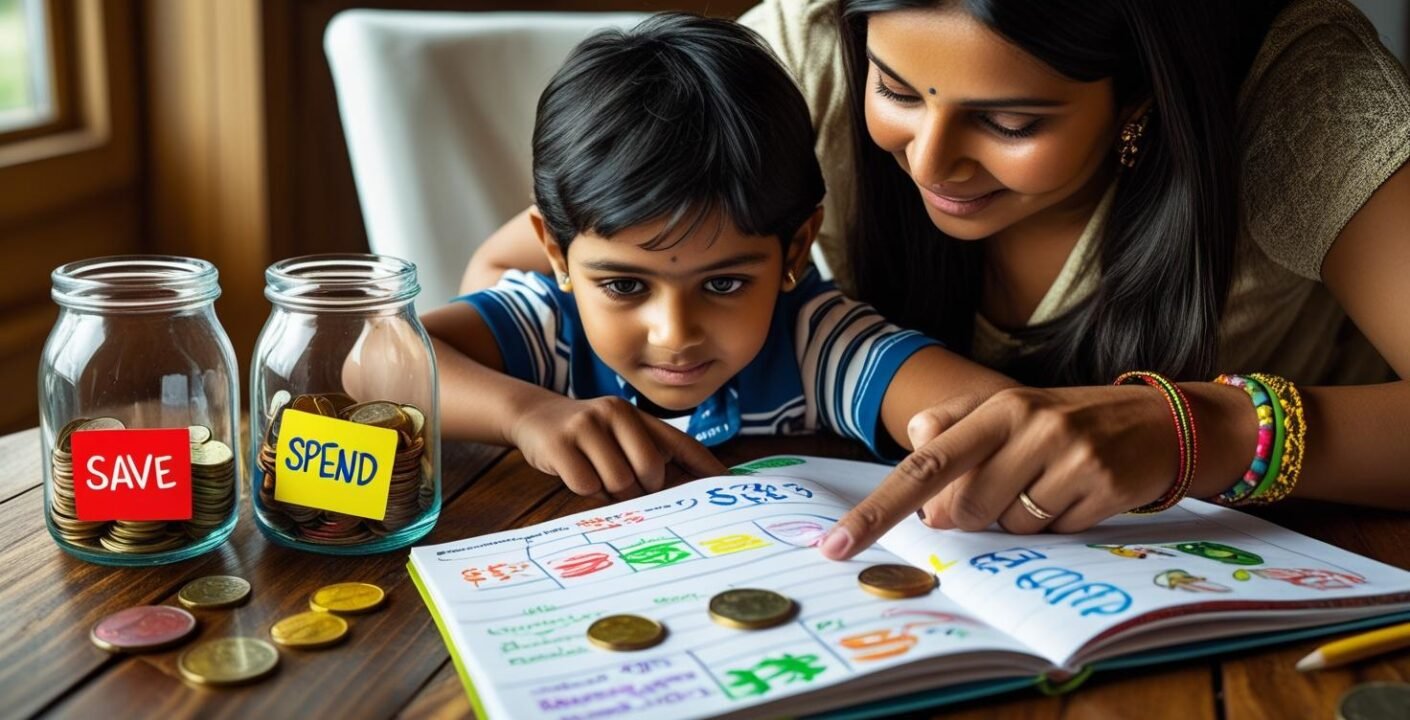
🟢 Pro Tip: Use Fin Free Kid’s “Pocket Money Planner Kit,” which includes color-coded jars or envelopes marked Spend, Save, Share, and Emergency. It teaches kids to distribute their money just like grown-ups do.
🧺 3. Involve Kids in Small Household Budgets
Include your child in daily money decisions. Let them help you prepare a grocery list and give them a small budget to choose items from. Explain what a “good deal” looks like. This boosts real-life understanding.
🟢 Learn by Doing: Fin Free Kid’s “DIY Budget Kit” comes with shopping roleplay games and pretend currency to help kids practice planning, prioritizing, and staying within a limit.
💰 4. Practice the “Save First” Rule Every Day
Children must learn that saving isn’t what’s leftover after spending—it’s the first thing we do when we receive money. Whether it’s a gift or allowance, encourage them to save a small portion right away.
🟢 Try This Visual Cue: Keep the Fin Free Kid’s “Smart Saver Jar” on the table. Ask them to drop coins in it every time they receive money. When it fills up, let them count it and track it using the included log sheet. Small wins make saving feel rewarding!
🤔 5. Discuss Needs vs. Wants in Everyday Life
Kids often want what they see, not what they need. Daily conversations can help them differentiate between needs and wants. Before any purchase, ask them: “Is this something you need, or just something you want right now?”
🟢 Tool to Try: Use the “Wants vs Needs Flashcards” from Fin Free Kid to quiz them while shopping, watching ads, or even planning birthday gifts. It’s a brilliant way to train their thinking process.
🎯 Final Thought: Budgeting Is a Muscle, Not a Rule
The best way to teach budgeting is through consistent, low-pressure practice. Don’t worry about perfection—focus on routine. With the right tools and a little patience, you’ll build a child who doesn’t just know about money but knows how to manage it wisely.
And when budgeting becomes fun—thanks to Fin Free Kid’s playful approach—it becomes a habit for life. 🌱
